

I remain amazed that Black History Month oftentimes still celebrates decontextualized people and events. If the context were the substance, however, we would be promoting new thinking and radical action. Hardly seems a coincidence that we have one model and not the other. Today I find myself thinking about Sojourner Truth and the ways that my students have talked about learning from her. This is a post that I wrote last spring that reminds me today of what Black History compels us to really do and understand. _________________
[ezcol_1half]
In my first academic job as an assistant professor, I was not allowed to choose what classes I wanted to teach, what times or days I would teach, or ever permitted to create a new course. There was a level of toxicity that began already in the first semester. Because the other newly hired assistant professor and myself taught at a critical point in the program where assessment data was vital, the chair and her two flunkies senior administrators once sat we two newbies down under the pretense of a “meeting.” It was just my first two months at this job and here we were, literally yelled at like misbehaving children: we needed to learn to do what we were told was the gist. The senior faculty, of course, were left alone. I started to get real heated and, at one point, started rising up from my chair. I don’t know what I was planning to do but as far as I was concerned, I was a grownass woman so sitting there obediently listening to an incompetent chair and her flunkies senior administrators (the chair made 100K more than I did) so violently weasel her way into getting two, new assistant professors just out of graduate school to do HER work for her was just… TOO… MUCH (she called this feminist collaboration). I was a brand-new assistant professor but I wasn’t THAT kinda brand-new. The tirade, however, abruptly ended when my fellow junior colleague started crying (as I have already described, white women’s tears always fulfill this function.) That was my very first semester as an assistant professor and that ain’t even the half; each semester only worsened, putting the H-O-T in hot mess. Needless to say, there has never been a single moment in my professional life where I have missed or thought fondly about this department or its leadership, a department that is pretty much defunct now. I do, however, deeply miss the sistafriends I made at that college.
 As soon as that “meeting” started, I noticed the peculiar way the chair and her
 flunkies senior administrators were looking at one another. I knew from jump that this meeting had been pre-planned and that something real foul was afoot. I am also someone who loves language and discourse; though I am not always quick enough on my feet to interject rapidly and cleverly, I will often commit a conversation to memory and this “meeting” was one of those times. Who talked first, second, and then the turn-takings were so memorably awkward and poorly performed that I just KNEW this “meeting” had been pre-orchestrated under the chair’s tutelage (she was good cop; the other two were bad cop). In fact, in these past nine years as a professor, I have learned this to be a common form of discourse maneuvering in academia with white administrators. When I suggested to my fellow-misbehaved-colleague that this was a premeditated homocide, she didn’t fully believe me. It was many months into the schoolyear before she realized just how unethical this chair was. Like with this moment, I have remained perplexed by my many colleagues, especially those of color, who can’t seem to gauge the petty politics, backstabbing, scheming, lying, theft, and violence that is being waged against them behind closed doors until it is much, much too late. In direct contrast, when I described the turn-taking of that chair’s “meeting” to my sistafriends at that college, they pointed out even more slippages that I didn’t catch. You see, these are women who read men and nations.
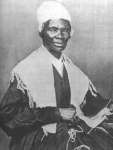 These women of color on my first campus as a tenure track professor were phenomenal and though I knew they were dope when I was there, I never fully realized that having a set of sistafriends on your campus to lift your head is a RARITY! Notice that I said: women of color who are sistafriends. That is NOT the same as having women of color on campus. I am not talking about the kinds of women of color who come talk to you in closed offices but never speak up in public settings, a strategy often learned early on because it is so handsomely rewarded in graduate school. These women might say they keep quiet because no one is listening to them but, more often, they choke their words to not lose favor with those in power, not ruffle white feathers, not take any risks, or not lose their token status (and many times go home to wealthy, breadwinning, and/or white husbands). They are, in sum, passing for white. I ain’t talking about THEM women of color.
[/ezcol_1half] [ezcol_1half_end]
I am talking about the sistas who read their environments openly, those who will read the institution out loud with you, the sistafriends who read institutional racism AND patriarchy. Talking up institutional racism does not always come with talking up patriarchy and misogyny and I mean something more than talking about public spectacles from the likes of male rappers (these are easy targets). I am talking about the women who also criticize the day-to-day workings of men in our workplaces— white men and men of color. My sistafriends at my first college didn’t just co-sign misogynistic black male colleagues who were actin the fool (dropping their “seed” anywhere, meeting with female students “after class”, texting/ calling/ closing-the-door with female students, etc); nor did we leave our feminism at the door and blindly support the campus’s white patriarchs and their violence like the white women on campus did. Like I said, I have learned the value and rarity of these kinds of sistas in these past years. You see, these were women who read men AND nations. They are the legacy of someone like Sojourner Truth.
 ”I don’t read such small stuff as letters, I read men and nations” are the famous words of Sojourner Truth, the famous African American suffragist and abolitionist. Elizabeth Cady Stanton described Truth making this statement to her in a 1867 visit. I have pushed myself to think deeply about this phrase because it is one that my students continually re-mix throughout a semester— always noticing how the black women who we have studied were reading their social environments! “Reading” someone is, of course, a popular African American verbal expression and usually means telling somebody about themselves after an extensive, head-to-toe assessment of who and what they really are. I imagine this is part of the reason students of African descent gravitate to this expression— they already recognize it. Remembering Truth, however, means we must take this expression much further. Reading men AND nations is about the ability to analyze and navigate white supremacy (nation) AND patriarchy (men). I can’t think of a better way to describe what my circle of sistafriends was doing at my former college than with Truth’s statement: a present-day iteration of a historical reality and necessity.
 My students’ reverberating references to Sojourner Truth also compel me to be a different kind of teacher-researcher. Part of me is responding to a tendency of mostly white teachers to describe mostly white students who reference a litany of white authors and novels in the course of classroom discussions. This gets marked as intelligent and well-read and I do certainly agree. However, within the scope of these parameters, I have never heard any black student be referenced in the same way for knowledge of black cultural history and persons (and what passes as KNOWLEDGE of people of African descent, even at the graduate level, is often so dismal that I am utterly embarrassed for all parties involved). At best, when undergraduate students of African descent reference black cultural histories, these are treated as personal connections, not literate connections (as if white students describing white authors is NOT also about personal connection). Alternatively, black students might be seen as activating their “prior knowledge” which is admirable and tolerated but that is not the same as regarding these moments as sophisticated analyses. So I push myself to see recurring themes and issues related to black female cultural figures as articulated by students of African descent as literate connections and sophisticated analyses: to, in sum, treat black students’ ruminations as seriously as white students’ get treated.
Today, when I celebrate, recognize, or honor someone like Sojourner Truth, I must remember to do more than study her life. We should all be pushing ourselves to analyze the world the way that she did. That would, indeed, be a different kind of Black History Month!
[/ezcol_1half_end]
 I once had to mediate a complaint against a teacher who failed a student’s paper because it was plagiarized. The student had lifted entire segments of each page from websites and the professor had a policy against this on his syllabus. The student insisted that the professor was actually implementing his policy only with her because he disagreed with her political beliefs. That’s a difficult thing to prove so she was out there on a limb with that one. Because she was contesting her final grade (she was insisting on an A and that a B+ was the lowest grade she could ever accept) and not the plagiarism, I had to read the plagiarized paper and her corpus of work (most often lifted from other sources). Her writing was stunningly weak, riddled with the most anti-black racism I have ever read from a college student, and strangely misinformed all at the same time. In one section of a paper, the student wrote a rather lengthy diatribe against affirmative action and used, as her evidence, that Columbia University’s undergraduate student population is 40% “black”…”Colored” is what she called them. She argued that Columbia had accepted all of these unqualified “Colored (i.e., black)” students over the white valedictorian of her class who was denied admission. I was confused, to say the least, and thought she meant a different Columbia than the ivy league institution housed in New York City. Columbia’s students are 40% black? When the hell did that happen and why ain’t I workin there? Thass that hotness right there. I did get excited for a minute when I read her words but then realized that I was being foolish for listening to such a foolish student. That just ain’t what Columbia has EVER looked like! She did have a (cut-and-pasted) section from Columbia’s website in her writing. The charts, graphs, and language did, in fact, show that Columbia was reporting 40% of its undergraduate student population to be OF COLOR (the majority population in that number is Asian). I was astounded that the student clearly did not understand and had never really seen the term “of color” before. She seemed to think it was referencing those old Colored Vs. White drinking fountains where “Colored” meant black. Her white male professor looks like the first person who actually confronted her ideas and writing ability and she saw him as a race traitor of the John Brown variety, insistent on lynching him! It would be funny if it weren’t so damn tragic. There are no surprises here though. This was a Christian, conservative white female at a Christian, conservative white-run college who had attended a Christian, conservative white high school. Imagine my surprise though to hear the exact same language from SOPHOMORE students of color at a “minority-serving” public college who attended predominantly Black and Latin@ public schools! They too had never heard the term “of color.” The same white political continuum operates in how they have been educated.
 Like always, I had students say things like they don’t think they are or can ever be intellectuals because English is not their first language or because they have an accent. These are actual quotes from last week’s class. And, of course, I have students, young black women, who unpack a discussion after class rather than in class because they don’t think they have a voice that people will hear… they will just be cast as that loud black girl in the corner again. That’s a quote too. Despite my early onset of racial battle fatigue, I realize that I need to sharpen my critique on the privileging of decontextualized grammar instruction. I don’t centralize grammar instruction in my course so for many folk, this means that I do not teach it all. If I thought grammar would alleviate the social and educational injustices that my people face (or even impact the students of color who I have described here), I would do it all day long. But at what point in my people’s history did a grammar lesson ever resolve systemic oppression, institutional racism, and education inequality? I mean, really, who thinks this simplistically? If all black folk needed was a grammar lesson for equality and social mobility in education, don’t you think we woulda BIN done that? There is a real vile disrespect happening in this construct.
 I haven’t made any final decisions yet, it’s still all coming together. I tend to get side-tracked when I do syllabus planning. I start taking notes for other projects or I make notes of new realizations. This moment is no different.
 It ended the same way it started… that’s another one of those expressions that I grew up hearing. There was no way that my mother, aunties, and older cousins would ever let any woman get away with saying, for instance, that a relationship ended because a man changed from the first moment you met. There is no True Side or Dark Side that emerges in the later stages of a relationship. Just so that it’s clear that I don’t associate doggishness with men only, I’ll offer advice based on a personal observation instigated by a woman. If you are the aggressively-pursued mister/mistress to a married woman, maintain “contact” while she is married, and then get back with her years later when she is still legally married but newly separated (but still creepin with her not-yet-ex-spouse and many others while her school-age son is in full tow), you can’t get mad when she brings all kinda lovers into your home and hearth. When the Isley Brothers crooned “Choosey Lover,” they didn’t have your lil honey EVER in mind and that evidence was always right there. I ain’t knocking the woman (no, this story ain’t about a sista— we wouldn’t get away with this and still keep our job/title/status as college professors) since men don’t lose dignity or respect for such lifestyles, I am just saying that you can’t ever expect monogamy in such an open system. The problems at the end were the same problems at the very beginning.
 For my own part, I have been in the early stages of a relationship where Partner-Potentials (PPs) hurry me off the phone in order to go for breakfast, drinks, coffee, or conversation with “friends,” without nary a worry about whether or not I was receiving the support, attention, or nurture that I needed. That PP is, plain and simple, a playa, so I treat them accordingly. If a PP like that cheats on you later, you most certainly cannot be surprised. That’s just what playas do so you can’t expect otherwise. Let’s not make it so extreme and let’s say this isn’t really a playa, just a smooth operator, so there is nothing “sexual” or flirtatious between your PP and all of these “friends,” present and past, who are obviously more valuable than you since you got hurried off. If you actually believe in such “innocence,” it still ain’t gon work. When hanging at lounges, bars, coffee shops, etc— all these bourgeois-chic performances— is the priority then financial stability, actual completion of a goal, and the ability to be dedicated to something real or to a relationship will not be soon forthcoming.
  In professional settings, I may not be able to necessarily get up and leave right away like I have with PPs, but I benefit from the clear reading of my environment early on.